
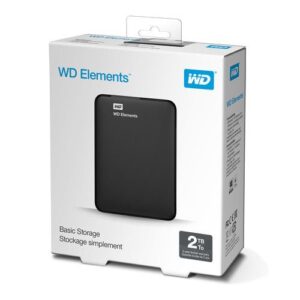
WD 2TB Element External Hard Drive
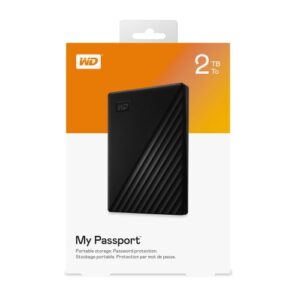
WD 2TB My Passport External Hard Drive
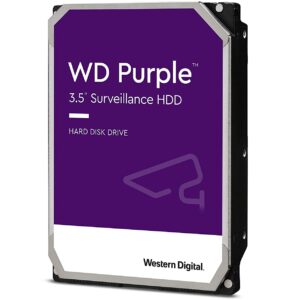
WD 2TB Purple Surveillance Hard Drive
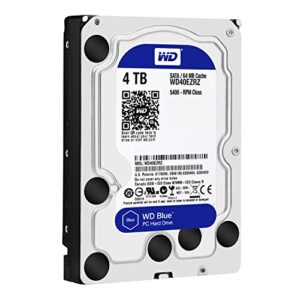
WD 4TB Blue Internal Hard Drive
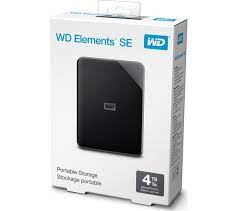
WD 4TB Element External Hard Drive
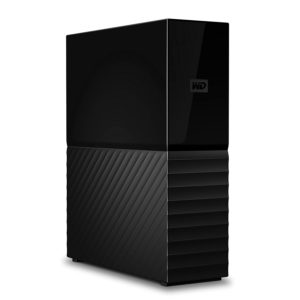
WD 4TB My Book External Hard Drive
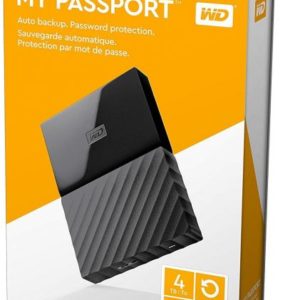
WD 4TB My Passport External Hard Drive

WD 4TB Purple Surveillance Hard Drive
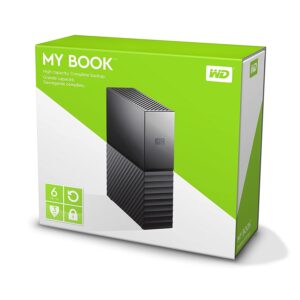
WD 6TB My Book External Hard Drive
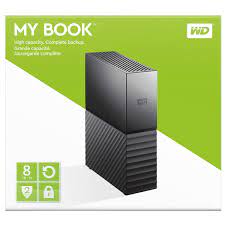
WD 8TB My Book External Hard Drive
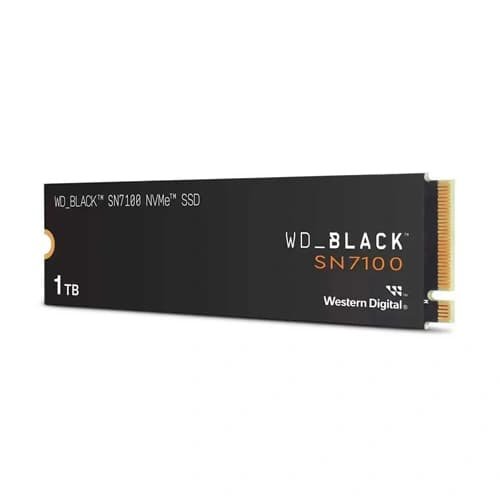
WD Black SN7100 1TB NVMe Gen4 SSD
Key Specifications
-
Capacity: 1 TB.
-
Form Factor: M.2 2280 (single-sided).
-
Interface: PCIe 4.0 ×4, NVMe. Back-compatible with PCIe 3.0/2.0.
-
Sequential Read Speed (max): up to ≈ 7,250 MB/s.
-
Sequential Write Speed (max): up to ≈ 6,900 MB/s.
-
Random IOPS (1TB model): ~1,000K reads / ~1,400K writes (based on some review data) for the 1TB and 2TB variants.
-
NAND Type: TLC 3D NAND (Western Digital’s next-gen).
-
DRAM: It is a DRAM-less design employing HMB (Host Memory Buffer) instead of on-board DRAM.
-
Endurance (TBW): For the 1TB model, rated around ~600 TBW (terabytes written) in some listings.
-
Warranty: 5-year limited warranty.
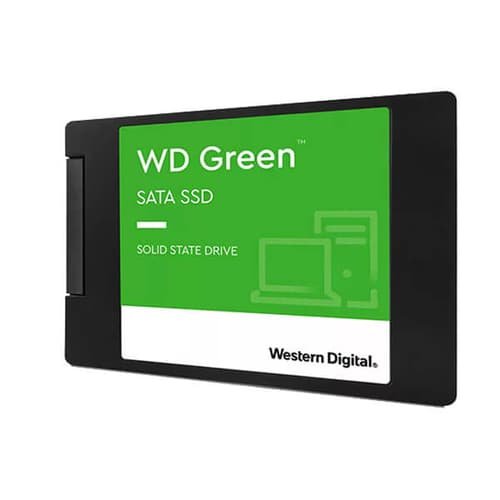
WD Green 240GB SSD
- Boost your system’s performance with the WD 240GB SATA Solid State Drive, designed for faster boot times, quick file transfers, and improved overall responsiveness.
- Built with reliable Western Digital technology, this SSD delivers up to 550MB/s read and 500MB/s write speeds, ensuring smooth multitasking and efficient storage performance.
- Ideal for upgrading desktops and laptops, it offers low power consumption, silent operation, and shock resistance for enhanced durability.
Key Features:
-
Capacity: 240GB
-
Interface: SATA III 6Gb/s
-
Sequential Read/Write: Up to 550/500 MB/s
-
Faster boot-up and application load times
-
Energy-efficient and reliable WD quality

WD SA510 1TB Blue SATA (SSD)
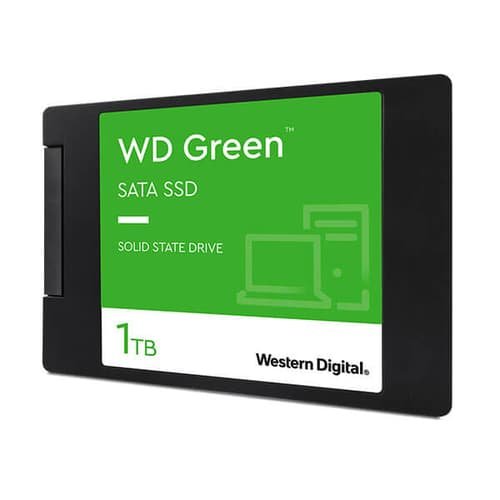
Western Digital Green 1TB Internal SSD
✅ Key Features
-
It’s an internal solid-state drive (SSD) with a 1 TB capacity, using the SATA III interface (6 Gb/s) in a 2.5″ / 7 mm form factor.
-
It uses no moving parts (typical of SSDs), which offers better shock-resistance and quieter operation compared to mechanical hard drives.
-
It supports SLC (single-level cell) caching (in the underlying controller/firmware) to help boost write performance for everyday tasks.
-
It is marketed for everyday computing: desktops, laptops, general use rather than heavy enterprise workloads.
-
Low power consumption: suitable for laptops where battery life matters.
-
Comes with a 3-year limited warranty (for many regions) from the manufacturer.
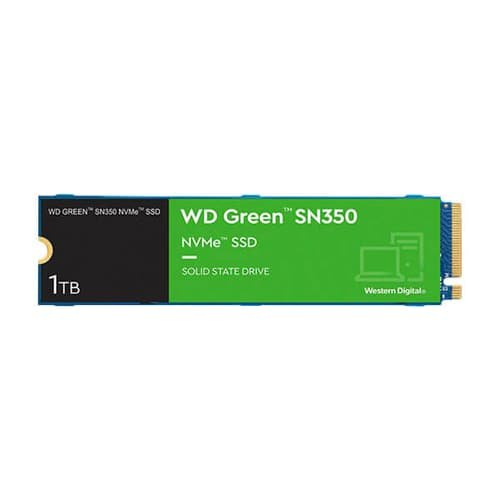
Western Digital Green SN350 1TB M.2 NVME Intenal SSD
✅ Key Specifications & Features
-
Form factor: M.2 2280 (80 mm length) — fits most modern laptops/desktops with an NVMe slot.
-
Interface: PCIe 3.0 ×4, NVMe version (v1.3) compatible.
-
Sequential read speed: Up to ~3,200 MB/s for the 1TB model.
-
Sequential write speed: Up to ~2,500 MB/s for the 1TB model.
-
Random performance: Up to ~300,000 IOPS (4 KB reads) and ~400,000 IOPS (4 KB writes) according to one spec sheet.
-
Endurance: For the 1TB version, rated at 100 TBW (terabytes written) which is quite low compared to many other 1TB SSDs.
-
Warranty: 3-year limited warranty.
-
Other: Single-sided design (makes it a good fit in compact laptops where clearance under the board may matter) and uses QLC NAND (for the 1TB/2TB models) and is DRAM-less (for cost savings) according to reviews.